
Mud Terrain vs All-Terrain Tires for Trucks

Table of Contents
- Mud Terrain Tires vs All-Terrain Tires: Core Differences
- Mud Terrain vs All-Terrain Tires: What Sets Them Apart
- Best All-Terrain Tires for Daily Driving
- Tire Tread Life Expectancy and Durability
- How to Choose Truck Tires for Georgia Terrain
- Performance in Wet Conditions and Highway Safety
- Which Tire Type Should You Choose for Your Truck
- Frequently Asked Questions
Last Updated: October 7, 2026
Mud Terrain Tires vs All-Terrain Tires: Core Differences
When you're choosing tires for your truck in Dallas, GA, understanding Mud vs all-terrain tires shapes everything from how your vehicle handles daily commutes to how it performs on challenging terrain. At Purpose Built Automotive, we help truck owners make this choice every day, and it starts with understanding what separates these two tire categories.
Off-road tires are built for serious terrain. They feature larger, more aggressive tread blocks designed to bite into mud, rocks, and loose surfaces. The sidewalls are reinforced to handle punctures and flex under extreme stress. All-terrain tires, by contrast, balance off-road capability with on-road manners. They use smaller tread blocks and operate at highway pressures, making them more predictable on pavement while still offering respectable dirt performance.
The core difference comes down to specialization. Mud tires sacrifice highway comfort and fuel efficiency for maximum traction in challenging conditions. All-terrain tires make compromises in both directions, excelling at neither extreme but performing adequately across a range of situations.
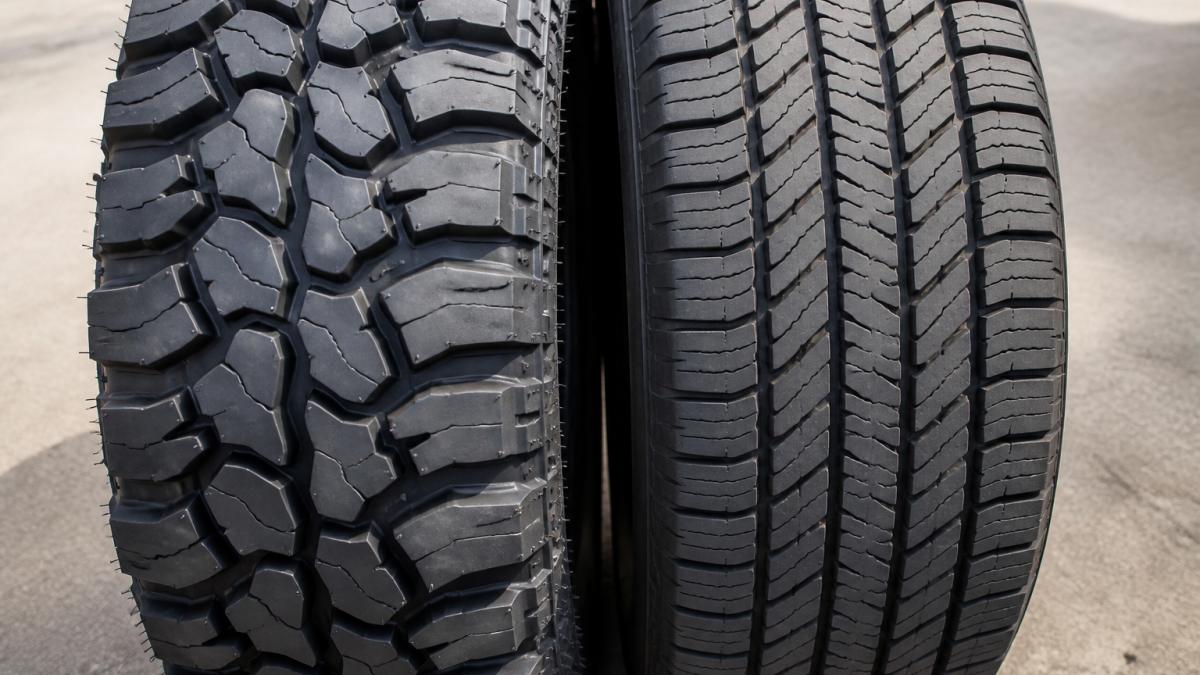
Close-up of aggressive Mud tire tread pattern with large blocks next to all-terrain tire showing moderate tread design, photographed on concrete with natural lighting
Mud Terrain vs All-Terrain Tires: What Sets Them Apart
Mud terrain tires are essentially another name for true off-road tires, though the term emphasizes their specialization in soft, wet terrain. The distinction between mud terrain and all-terrain tires matters because it affects how your truck behaves in Georgia's varied conditions.
Mud terrain tires use wider spacing between tread blocks, which helps them self-clean as they rotate. This design prevents mud from packing into the tread and reducing grip. The deeper grooves also channel water away from the contact patch more aggressively. All-terrain tires use closer tread spacing, which improves water evacuation on highways but reduces self-cleaning ability in thick mud.
Sidewall construction differs significantly too. Mud terrain tires have thicker, more reinforced sidewalls to prevent damage on rocky terrain. All-terrain tires use lighter sidewalls optimized for ride comfort on paved roads. This makes mud terrain tires heavier and stiffer, while all-terrain tires feel more forgiving during normal driving.
For truck owners in Dallas who encounter clay-heavy mud or rocky trails, mud terrain tires provide superior performance. For those who need occasional off-road capability without sacrificing daily drivability, all-terrain tires make more practical sense.
Best All-Terrain Tires for Daily Driving
If you're driving a truck primarily on Dallas streets and highways but want the option to explore unpaved roads on weekends, all-terrain tires deliver the balance most truck owners need. These tires prioritize on-road manners while maintaining respectable off-road traction.
All-terrain tires perform well on wet pavement because their moderate tread depth and block design manage water evacuation effectively. They're quieter than mud terrain tires on the highway, reducing cabin noise during commutes. Fuel efficiency remains closer to standard truck tires, which matters if you're running a work truck or towing regularly.
The best all-terrain tires for daily driving feature reinforced shoulders for load-carrying stability and tread compounds formulated for temperature consistency. They maintain predictable handling on curves and deliver responsive braking on dry roads. Many all-terrain tires also offer sidewall protection against curb damage, a practical feature for urban driving.
For Dallas truck owners who use their vehicles for business or personal transport during the week, all-terrain tires eliminate the need for seasonal tire swaps. They handle light snow and ice reasonably well, and they won't leave you stranded on a rough forest service road if the opportunity for adventure arises.
Tire Tread Life Expectancy and Durability
Tire tread life expectancy depends heavily on tire type, driving habits, and maintenance. Off-road and mud terrain tires typically wear faster than all-terrain tires because their aggressive tread design sacrifices tread depth for traction. The softer rubber compounds used in off-road tires also wear more quickly under highway driving.
All-terrain tires generally offer longer tread life when driven primarily on pavement. Their tread compounds are harder, and their design prioritizes durability on paved surfaces. However, tread life varies based on driving conditions. Frequent highway miles extend tire life for all-terrain tires. Frequent off-road use accelerates wear on any tire type.
Durability in the sidewall tells a different story. Off-road and mud terrain tires feature thicker, more durable sidewalls because they encounter rocks, branches, and other hazards regularly. All-terrain tires use lighter sidewalls, which improves comfort but reduces resistance to punctures and cuts. A sidewall cut on an all-terrain tire often requires replacement, while an off-road tire might survive the same damage.
Regular rotation and proper inflation extend the life of any tire. Underinflation causes faster edge wear and generates excess heat. Overinflation concentrates wear in the center of the tread. Maintaining the tire pressure recommended by your truck's door jamb placard keeps tread wear even and maximizes the life you get from your investment.
How to Choose Truck Tires for Georgia Terrain
Georgia terrain varies significantly. The northern part of the state features rocky, clay-based soil with elevation changes. The southern regions include sandy, well-drained soil with flatter topography. Dallas sits in the transition zone, with clay-heavy soil that becomes slippery when wet.
Start by assessing how you actually use your truck. If you spend 90 percent of your time on roads and 10 percent on trails, all-terrain tires make sense. If you're running a landscaping business or construction fleet in Dallas that encounters muddy job sites regularly, mud terrain tires justify their compromises. If you tow a camper trailer on weekends and drive the truck daily for work, all-terrain tires keep your vehicle versatile without forcing tire changes.
READY TO BUILD YOUR DREAM TRUCK? →
Consider your truck's suspension and load capacity. Heavier tires like mud terrain options require more energy to rotate, increasing strain on your suspension and drivetrain. All-terrain tires demand less from your truck's mechanical systems. If your truck is already modified with a lift kit or upgraded suspension, it may handle the weight of mud terrain tires more comfortably.
Think about maintenance access. If you're running a work truck or small fleet, having one tire type simplifies spare tire management and maintenance scheduling. Rotating between two tire types complicates record keeping and increases the chance of mixing tire ages or conditions.
Performance in Wet Conditions and Highway Safety
Wet pavement safety depends on tread design and rubber compound. All-terrain tires handle wet roads better than mud terrain tires because their tread design prioritizes water evacuation at highway speeds. The closer tread spacing channels water away from the contact patch more efficiently, reducing hydroplaning risk.
Mud terrain tires sacrifice wet-road performance because their design prioritizes off-road traction. The wider tread spacing that helps them self-clean in mud creates channels that can trap water on pavement. Driving mud terrain tires on wet highways requires slower speeds and longer following distances.
Braking distance on wet pavement differs between tire types. All-terrain tires deliver shorter braking distances because their tread design and rubber compounds optimize grip on paved surfaces. Mud terrain tires require longer braking distances, particularly on wet roads, because their aggressive tread design doesn't prioritize highway traction.
Temperature stability matters too. All-terrain tires maintain consistent performance across a wider temperature range because their compounds are formulated for highway use. Mud terrain tires can become slippery in cold weather because their softer compounds lose grip at lower temperatures.
For Dallas drivers who encounter frequent rain and wet roads, all-terrain tires provide a safety advantage. If you're running a fleet of work trucks that must operate in all weather conditions, all-terrain tires reduce the risk of weather-related accidents and keep your vehicles predictable on wet roads.
Which Tire Type Should You Choose for Your Truck
The right tire choice in the off-road vs all-terrain tires decision depends on your priorities and how you actually use your truck. Off-road or mud terrain tires make sense if you regularly encounter challenging terrain and can accept highway compromises. All-terrain tires make sense if you want versatility without sacrificing daily drivability.
Ask yourself these questions: Do I spend more time on pavement or off-pavement? How often do I encounter mud or rocky terrain? Am I willing to accept a rougher ride and reduced fuel efficiency for maximum off-road capability? Do I need my truck to feel comfortable on the highway?
If you're unsure, all-terrain tires provide the safest middle ground. They handle most situations adequately and don't force you to accept significant highway compromises. If you later discover you need more off-road capability, you can upgrade to mud terrain tires knowing what trade-offs you're making.
Purpose Built Automotive in Dallas helps truck owners make this decision based on their actual use case. We carry both tire types and can help you evaluate which option fits your vehicle, your driving patterns, and your budget. Our team understands Georgia terrain and Dallas driving conditions, and we can recommend the tire type that delivers the performance you need.
The key is matching your tire choice to your lifestyle. Overbuying tire capability costs you comfort and efficiency. Underbuying leaves you stranded or struggling in conditions you encounter regularly. The right choice sits at the intersection of your actual needs and your willingness to accept trade-offs.
Choosing between off-road and all-terrain tires shapes how your truck performs every time you drive. The wrong choice creates frustration on roads or trails you encounter regularly. At Purpose Built Automotive in Dallas, we've helped hundreds of truck owners select tires that match their real-world driving patterns. We offer professional installation of premium tire options and can help you understand how different tread designs and compounds perform in Georgia's varied terrain. Ready to find the right tires for your truck? Contact Purpose Built Automotive today and let our experienced team help you build the truck that fits your lifestyle.
Frequently Asked Questions
What is the main difference between all-terrain and dedicated off-road tires?
Off-road tires feature aggressive, blocky tread patterns designed for maximum grip on rocks, mud, and uneven terrain. All-terrain tires use a more balanced tread design that performs adequately off-road while maintaining better highway stability and fuel efficiency. Off-road tires prioritize traction; all-terrain tires balance multiple surfaces.
Can I use all-terrain tires for daily commuting in Dallas?
Yes, all-terrain tires work well for daily driving. They're engineered for both highway and light off-road use, offering reasonable comfort and predictable handling on paved roads. They perform safely in wet conditions typical of the region and provide good traction without the noise and wear characteristics of dedicated off-road tires.
How do off-road tires wear compared to all-terrain tires?
Off-road tires typically wear faster on highways due to their aggressive tread design and softer rubber compounds. All-terrain tires last longer on pavement because they're engineered for mixed use. If you drive mostly on roads, all-terrain tires will extend your replacement intervals and reduce long-term costs.
Which tire type performs better in wet Georgia road conditions?
All-terrain tires perform better in wet conditions because their balanced tread design channels water more effectively and maintains consistent grip on wet pavement. Off-road tires, designed primarily for loose surfaces, can feel less predictable on wet asphalt. For safety in rain, all-terrain tires are the more reliable choice for road driving.