
Air Suspension vs Coil Springs for Trucks

Table of Contents
- Air Suspension vs Coil Springs: Core Differences
- Ride Quality and Comfort Comparison
- Air Helper Springs for Towing
- Professional Truck Lift Kit Installation Cost
- Reliability and Maintenance: Which System Lasts Longer
- Coil Spring Conversion Kit Benefits
- Making Your Decision: Suspension for Your Truck's Purpose
- Frequently Asked Questions
Last Updated: October 4, 2026
Air Suspension vs Coil Springs: Core Differences
Understanding air suspension vs coil springs for trucks fundamentally changes how your truck handles load, terrain, and daily driving. At Purpose Built Automotive in Dallas, GA, we help truck owners understand these systems so they can make the right decision for their specific needs.
Air suspension uses pressurized air chambers to support your truck's weight. Coil springs rely on metal coils that compress and extend. The difference goes beyond materials, it affects ride quality, maintenance, towing capacity, and long-term cost.
Air suspension systems adjust automatically as load increases. Your truck stays level whether you're empty or fully loaded. Coil springs maintain a fixed height regardless of cargo, which means a heavy load can sag the rear end and affect handling. This is why air suspension has become popular for trucks that tow regularly or carry varying loads.
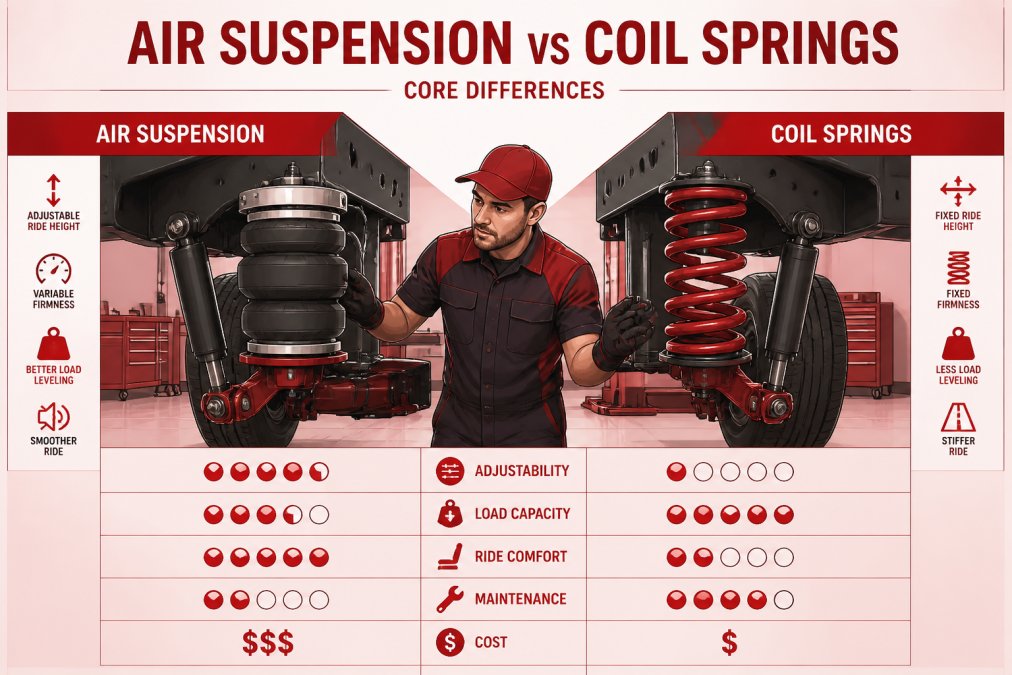
Coil springs are simpler mechanically. They have fewer moving parts and no air compressor to maintain. For trucks that carry consistent loads or see light-duty use, coil springs work reliably without much attention. Air suspension adds complexity but delivers performance benefits that many truck owners find worth the trade-off.
The real decision comes down to how you use your truck. Weekend warrior? Towing a camper regularly? Running a commercial fleet? Each scenario points toward different suspension solutions. We'll break down the specifics so you can choose with confidence.
Ride Quality and Comfort Comparison
Air suspension delivers a noticeably smoother ride on highways and rough terrain. The air chambers absorb bumps progressively, meaning the suspension responds differently depending on impact severity. Small bumps disappear. Large impacts compress the air more, providing firm support without harsh jolts. Many drivers report that air suspension feels like floating rather than being jostled around.
Coil springs provide a more connected, responsive feel. You sense the road more directly. This can be desirable for off-road driving where you want feedback about terrain. On highways, coil springs transmit more vibration into the cabin, especially with a light load. Add weight to the truck, and the ride stiffens further because the springs compress less relative to their travel range.
Comfort matters more than people expect. A truck that feels rough on a two-hour commute becomes exhausting on a four-hour haul. If you spend significant time driving, air suspension's compliance makes a real difference. If you drive short distances or off-road where feedback helps, coil springs keep you connected to the terrain.
Air suspension also maintains consistent ride height. Your truck doesn't squat under load, which means headlights stay aimed properly and the cab doesn't tilt. Coil springs sag when loaded, changing sight lines and affecting aerodynamics slightly. For towing, this matters, your trailer tongue sits lower, changing hitch geometry and potentially affecting braking balance.
Air Helper Springs for Towing
Air helper springs address the core problem with coil springs: sagging under load. When you hitch a heavy trailer, the rear end drops. Your truck's geometry changes. The suspension compresses fully, leaving little travel for bumps. Braking becomes less responsive because weight distribution shifts.
Air helper springs install alongside coil springs to provide extra support when needed. They're independent from the main suspension, activating only when pressure increases. On empty runs, they stay dormant. When you load the truck or connect a trailer, air fills the chambers and they support the additional weight. This keeps your truck level and maintains proper suspension geometry.
The benefit is clear: you get the simplicity of coil springs with load-leveling capability. Your truck stays stable when towing. Braking feels consistent. Headlights aim correctly. The ride stays relatively comfortable even with significant cargo.
Installation of air helper springs is straightforward for experienced technicians. They bolt to existing suspension components without major modifications. At Purpose Built Automotive, we handle the complete installation, ensuring proper air line routing and pressure settings so your truck performs safely under load.
Cost matters here. Air helper springs cost significantly less than a full air suspension conversion. If you occasionally tow or carry heavy loads but don't need the refinement of a complete air system, helper springs deliver practical value without the investment.
Professional Truck Lift Kit Installation Cost
Professional installation separates quality work from DIY shortcuts. The price varies based on suspension type, truck model, and additional components like wheels, tires, and lighting. Rather than quoting specific figures that may not reflect current pricing, we recommend contacting Purpose Built Automotive directly for an accurate estimate tailored to your truck and goals.
What matters is understanding what professional installation includes. Experienced technicians align your suspension correctly, ensuring even ride height and proper geometry. They test the system under load. They verify brake function, steering response, and clearance for larger tires. Poor installation leads to uneven wear, handling problems, and safety issues.
DIY installation seems cheaper initially but often costs more when problems emerge. Suspension work requires specialized tools, technical knowledge, and precise measurements. A misaligned suspension wears tires rapidly and affects handling. A brake line routed incorrectly creates safety hazards. Professional installation protects your investment.
Our technicians understand truck-specific challenges and deliver work backed by our commitment to quality. We handle the complete package, suspension, wheels, tires, and any aesthetic upgrades you want, so you get a cohesive result rather than mixing components from different shops.
Reliability and Maintenance: Which System Lasts Longer
Coil springs outlast air suspension in raw longevity. A coil spring can function for the life of your truck with zero maintenance. Air suspension requires periodic inspection and eventual compressor replacement or air line repair.
Air suspension complexity means more potential failure points. The compressor can wear out. Air lines can develop leaks. Valves can stick. When something fails, the entire system may stop functioning until repaired. Coil springs fail gradually, you notice sagging over time. Air suspension can fail suddenly, one morning your truck sits lower than normal.
READY TO BUILD YOUR DREAM TRUCK? →
However, air suspension reliability has improved dramatically. Modern systems include redundancy and diagnostics. Quality air suspension lasts 150,000 miles or more with proper maintenance. Regular inspection catches small issues before they become expensive problems.
Maintenance differs significantly. Coil springs need nothing. Air suspension requires periodic air line checks, compressor inspection, and occasional valve cleaning. This isn't burdensome, but it requires attention. Neglect leads to failure.
For commercial fleets and heavy-use trucks, this reliability difference matters. Downtime costs money. Coil springs keep trucks operating with minimal fuss. Air suspension demands more oversight but delivers performance benefits that justify the effort for trucks that need them.
| Suspension Type | Lifespan | Maintenance | Failure Mode | Best For |
|---|---|---|---|---|
| Coil Springs | 200,000+ miles | None | Gradual sagging | Light-duty, consistent use |
| Air Suspension | 150,000+ miles | Periodic inspection | Sudden failure | Towing, varying loads |
| Air Helper Springs | 200,000+ miles | Minimal checks | Slow pressure loss | Occasional heavy loads |
Coil Spring Conversion Kit Benefits
Some truck owners start with air suspension and later convert to coil springs. This happens when maintenance costs exceed the value of the system, or when simplicity becomes more important than refinement.
A coil spring conversion removes the air suspension entirely and installs traditional springs. The benefit is straightforward: no compressor, no air lines, no valves to fail. Your truck becomes mechanically simpler. Repairs become cheaper because you're not replacing specialized components.
Conversion also appeals to off-road enthusiasts. Coil springs handle extreme articulation better than air suspension in rock crawling situations. The springs compress fully, allowing maximum wheel travel. Air suspension can't match this performance in extreme terrain.
The trade-off is losing the automatic load-leveling and smooth highway ride. Your truck returns to traditional behavior, sagging under load, firmer ride, less comfort on long drives. For trucks that rarely tow and spend more time on trails than highways, this trade-off makes sense.
Conversion kits vary in quality. Budget kits use basic springs and minimal components. Quality kits include upgraded springs, reinforced brackets, and proper geometry correction. Purpose Built Automotive installs conversion kits that maintain your truck's integrity and handling characteristics while delivering the simplicity you want.
Making Your Decision: Suspension for Your Truck's Purpose
Your truck's primary purpose should drive the suspension choice. When deciding between air suspension vs coil springs for trucks, ask yourself: What does this truck do most often?
Choose air suspension if you tow regularly, carry variable loads, or prioritize highway comfort. The load-leveling capability keeps your truck stable and level. The smooth ride makes long drives less fatiguing. You'll spend more on maintenance, but the performance justifies the investment.
Choose coil springs if you drive light-duty, prefer mechanical simplicity, or spend significant time off-road. You'll save on maintenance and repairs. The truck feels more connected to the terrain. Handling remains predictable and responsive.
Choose air helper springs if you occasionally tow but don't need a full air suspension system. This middle ground keeps costs reasonable while solving the sagging problem. Your truck handles occasional heavy loads without the complexity of a complete air system.
Purpose Built Automotive helps Dallas, GA truck owners navigate this decision every day. We understand local driving conditions, typical use patterns, and what works best for your situation. Whether you need a complete air suspension installation, a coil spring conversion, or air helper springs for towing, we handle the complete package with expert technicians and quality components.
The right suspension choice makes your truck more capable, comfortable, and reliable for years to come. Contact Purpose Built Automotive to discuss your needs and get started on the suspension upgrade that matches how you actually use your truck.
Your truck's suspension affects every aspect of how it performs. Whether you're hauling cargo, towing a trailer, or navigating Dallas, GA terrain, the right suspension system makes the difference between frustration and satisfaction. Purpose Built Automotive specializes in complete suspension upgrades, including air suspension installation, coil spring systems, and air helper springs for towing, all professionally installed by our experienced technicians. Get in touch with our team to discuss your truck's needs and discover how we can transform your vehicle's performance and comfort with the suspension solution that fits your specific purpose.
Frequently Asked Questions
Is air suspension better than coil springs for towing?
Air suspension excels at load leveling, it automatically adjusts ride height when you hook up a trailer, keeping your truck level and stable. Coil springs don't adapt automatically, so towing heavy loads can compress them and cause sagging. However, coil springs are simpler and more durable for frequent heavy towing. For weekend camper trips, air suspension wins; for commercial hauling every day, coil springs or air helper springs are more reliable long-term.
Can I add air helper springs to my existing coil suspension?
Yes. Air helper springs bolt onto your coil spring suspension to provide load support without replacing the entire system. They're cost-effective for truck owners who tow occasionally but don't want a full air suspension overhaul. Installation is straightforward and doesn't void warranties on your base suspension. This is a popular middle-ground solution for landscaping trucks and weekend towing.
Which suspension system is more reliable for daily driving?
Coil springs are simpler and require less maintenance, no air compressor, no electronic sensors to fail. Air suspension offers a smoother ride on rough roads but adds complexity and potential failure points. For daily drivers in urban or highway settings, coil springs provide dependable performance without surprises. Air suspension shines on uneven terrain but costs more to repair if something breaks.
What are the maintenance differences between air and coil systems?
Coil springs need periodic inspection for rust and damage but rarely require replacement. Air suspension requires regular air system checks, compressor maintenance, and replacement of air springs every 80,000-100,000 miles. Coil springs last longer overall, making them lower-maintenance for high-mileage trucks. Air systems demand more attention but deliver superior adjustability and comfort when properly maintained.