
All Terrain Car Tires: A 2026 Buyer's Guide

Table of Contents
- All Terrain Car Tires: What They Are and Who Needs Them
- All-Terrain vs Highway Tires: Key Differences
- How Long Do All-Terrain Tires Last?
- The Impact of All-Terrain Tires on Gas Mileage
- Tread Design, Noise, and Wet Weather Traction
- Winter Ratings and Tire Pressure for Different Terrains
- Choosing the Right All Terrain Car Tires for Your Vehicle
- Frequently Asked Questions
Last Updated: October 2, 2026
All Terrain Car Tires: What They Are and Who Needs Them
All terrain car tires are tires built with a hybrid tread design that balances off-road grip with acceptable on-road manners, making them a practical choice for drivers who split time between pavement and unpaved surfaces. At Purpose Built Automotive, we fit these tires on everything from daily-driven SUVs to work trucks that see gravel lots every morning. The all terrain car tires category sits between all-season rubber and aggressive mud-terrain tires, and that middle position is exactly why it confuses so many buyers.
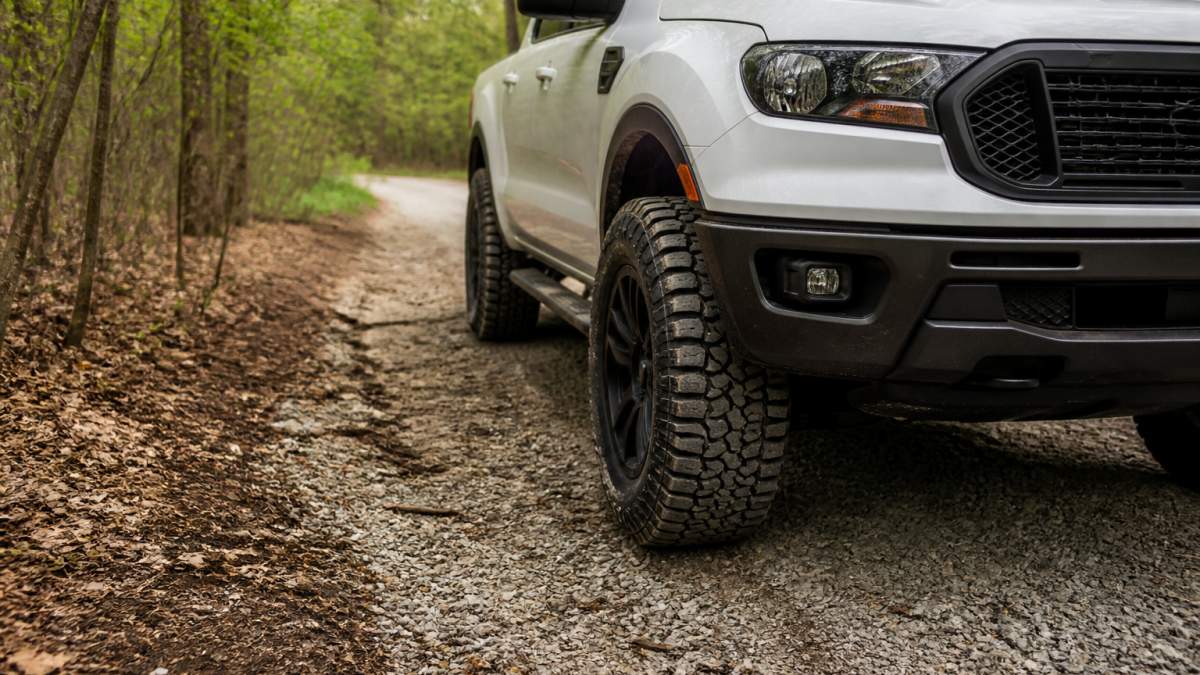
The core appeal comes down to tread blocks: chunky, staggered lugs that bite into loose material while still rolling smoothly enough for a highway commute. A common mistake is assuming "all terrain" means "any terrain, any condition." It doesn't. These tires trade some quiet and some fuel efficiency for capability, and whether that trade is worth it depends entirely on how you actually drive.
Who needs them? Drivers who regularly encounter gravel, mud, hard pack, or seasonal snow, and who don't want to own two sets of wheels. If your truck never leaves asphalt, you're paying a penalty for capability you'll never use.
All-Terrain vs Highway Tires: Key Differences
The difference between all-terrain and highway tires comes down to tread design, sidewall durability, and where each one performs best. Highway tires prioritize low road noise, long tread life, and low rolling resistance. All-terrain tires prioritize traction on loose surfaces, puncture resistance, and sidewall strength.
Here's how the two compare across the factors that matter most:
| Factor | All-Terrain Tires | Highway Tires |
|---|---|---|
| Tread pattern | Open, chunky blocks | Tight, shallow ribs |
| Road noise | Noticeably louder | Quiet |
| Off-road capability | Strong on gravel, mud, hard pack | Poor |
| Highway comfort | Acceptable, firmer | Best |
| Tread life | Shorter | Longer |
| Rolling resistance | Higher | Lower |
| Best for | Mixed-surface driving | Pavement-only driving |
The gap in highway comfort has narrowed considerably. Modern rubber compound technology and computer-designed void ratios mean today's all-terrain tires ride far better than the versions sold a decade ago. Still, if 95% of your miles are interstate, a highway tire will serve you better on noise and tread life.
How Long Do All-Terrain Tires Last?
Most all-terrain tires last between 40,000 and 60,000 miles under normal mixed driving, though aggressive tread patterns and heavy towing shorten that range. The variables that matter are your driving mix, your vehicle's weight, and how faithfully you rotate.
Tread depth is the honest measuring stick. New all-terrain tires typically start around 12/32 to 16/32 of an inch. Once you drop near 4/32, wet traction and hydroplaning resistance fall off sharply, and most safety guidance treats 2/32 as the legal minimum for replacement.
Tire rotation is the single biggest lever you control. Rotating every 5,000 to 7,000 miles keeps wear even across all four corners, which matters more on all-terrain tires because the front and rear axles wear at different rates on a heavy truck or SUV.
The Impact of All-Terrain Tires on Gas Mileage
All-terrain tires typically reduce fuel economy compared to highway tires, and the penalty is real enough to factor into your budget before you buy.
READY TO BUILD YOUR DREAM TRUCK? →
- Rolling resistance. The open tread pattern flexes more as the lugs compress against pavement, and every flex converts engine energy into heat instead of forward motion. Rolling resistance is the single largest contributor to the penalty on the highway.
- Unsprung weight. All-terrain tires are usually heavier than the highway tires they replace, often 5 to 15 pounds per tire depending on size and load range. That weight has to be accelerated and decelerated with every rotation, and it also taxes your brakes and suspension.
- Effective gearing. A larger overall diameter changes your final drive ratio. Going up a size or two can push your engine out of its most efficient RPM band at highway speed, which shows up as a bigger MPG drop than the tire's rolling resistance alone would suggest.
You can limit the damage without giving up capability:
- Choose the lightest all-terrain tire that still meets your vehicle's load index requirement, load range E tires are heavier than you need unless you tow or haul near capacity.
- Avoid going up more than one or two sizes unless you regear the differentials to compensate.
- Keep tires inflated to the door-jamb spec for street driving; underinflation is the most common cause of avoidable fuel loss and it accelerates shoulder wear.
- Recheck your speedometer and odometer after any diameter change. Odometer error skews your own fuel math, and a speedometer reading low can also mean you're driving faster than you think.
- Rotate on schedule. Uneven wear increases rolling resistance and shortens tread life at the same time.
Rolling resistance is the term to remember. It's the energy your engine spends flexing the tire, and every design choice that improves off-road grip, deeper voids, softer compounds, taller sidewalls, tends to increase it. If fuel economy is your top priority and you rarely leave pavement, a highway tire will always win. If you need the capability, the goal is to minimize the penalty rather than eliminate it.
Tread Design, Noise, and Wet Weather Traction
Tread design determines how an all-terrain tire sounds, wears, and grips in the rain, and the three are locked together. You cannot maximize all of them at once, so the design is always a compromise.
Winter Ratings and Tire Pressure for Different Terrains
A few practical notes on winter use:
- 3PMSF tires are not a substitute for dedicated winter tires in severe conditions, but they close much of the gap for drivers who see occasional snow rather than months of it.
- All-terrain tires with 3PMSF certification are increasingly common, so you don't have to sacrifice off-road capability to get winter-rated rubber.
- Check the sidewall for the symbol itself, not just the marketing copy. Some tires are advertised as "winter-ready" without the certification.
| Terrain | Pressure Strategy | Why It Works |
|---|---|---|
| Highway | Door-jamb spec | Even wear, best fuel economy, lowest heat buildup |
| Gravel | 5-10 PSI below street spec | Larger contact patch, less wheel spin, softer ride |
| Sand | 12-18 PSI below street spec | Floats on the surface instead of digging in |
| Rock | Near street spec, or slightly below | Protects sidewalls from pinching between tire and rim |
| Mud | Slightly reduced | Clears tread better while maintaining sidewall protection |
A tire pressure monitoring system (TPMS) will warn you when pressure drops, but it won't tell you the right pressure for the terrain you're on. Carry a quality gauge, know your street spec, and adjust deliberately rather than guessing.
Choosing the Right All Terrain Car Tires for Your Vehicle
Matching all terrain car tires to your vehicle and your actual driving mix is the whole game. Start with the load index and speed rating your manufacturer specifies, then work outward from there.
A practical decision framework:
- Mostly pavement, occasional gravel: a mild all-terrain with a tighter tread pattern and a 3PMSF rating if you see snow
- Heavy towing or hauling: prioritize load index and sidewall durability over tread aggressiveness
- Serious off-road use: accept the noise and fuel penalty and choose a more open pattern
- Light truck and SUV daily drivers: a mid-range all-terrain hits the best balance of tread life and capability
Frequently Asked Questions
Is it worth getting all-terrain tires for a daily driver?
It depends on your priorities. All-terrain tires give you off-road capability, puncture resistance, and a tougher sidewall. But you trade some highway comfort, fuel economy, and tread life compared to all-season tires. If you drive mostly on pavement and rarely leave it, a highway tire will last longer and ride quieter. If you regularly hit gravel, mud, or hard pack, all-terrain tires are worth the compromise.
Do all-terrain tires affect fuel economy and road noise?
Yes. The aggressive tread pattern and heavier construction increase rolling resistance, which can lower gas mileage by a few miles per gallon depending on your vehicle and driving habits. Road noise also increases, especially at highway speeds. Tires with a tighter void ratio and siping tend to run quieter than aggressive mud-terrain designs. Proper inflation and regular tire rotation help minimize both issues.
What is the difference between all-terrain and mud-terrain tires?
All-terrain tires balance on-road comfort with off-road capability. They handle gravel, dirt, and light mud while staying quiet enough for daily driving. Mud-terrain tires have larger tread blocks and deeper voids for extreme off-road traction, but they are louder, wear faster on pavement, and perform worse in wet braking. For most truck and SUV owners who split time between highway and trail, all-terrain is the better choice.
Can I put all-terrain tires on any car or truck?
You can mount all-terrain tires on most trucks, SUVs, and crossovers, but you need to match the load index, speed rating, and size to your vehicle. Smaller cars may not have the clearance or suspension to handle the extra weight and rolling resistance. Check your door jamb sticker for the original tire size and load rating. A professional installer can confirm vehicle compatibility before you buy.