
How to Choose the Right Off-Road Suspension

Table of Contents
- Understanding Off-Road Suspension Types
- How to Choose a Lift Kit for Your Vehicle
- Selecting Off-Road Shocks and Struts
- Suspension for Daily Driver and Off-Road Use
- Off-Road Suspension for Towing and Overlanding
- Key Factors to Evaluate Before Installing Off-Road Suspension
- Common Mistakes to Avoid When Upgrading Suspension
- Frequently Asked Questions
Last Updated: October 14, 2026
Understanding Off-Road Suspension Types
Choosing the right off-road suspension starts with understanding what's available. Your vehicle's suspension system handles the terrain, absorbs impacts, and keeps your truck stable when things get rough. We at Purpose Built Automotive help customers navigate these choices every day, and the first step is knowing your options.
Off-road suspension comes in three main varieties, each with different strengths. The type you pick affects how your truck handles, how much ground clearance you get, and how much weight you can carry. Let's break down each one so you can see which fits your needs.
Coil Spring Systems
Coil springs use metal coils to support your vehicle's weight. They compress and extend as you drive over bumps. This design is common on modern trucks and Jeeps because it offers a smooth ride on both pavement and trails.
Coil springs work well for daily drivers who want off-road capability without sacrificing comfort. They handle weight well and give you good articulation on uneven terrain.
Many owners in Dallas, GA choose coil spring systems when they want balanced performance. They're reliable, easy to maintain, and work with most aftermarket lift kits.
Leaf Spring Systems
Leaf springs are flat metal strips stacked together. They support your vehicle and flex as you drive. You'll find them on many trucks, especially older models and work vehicles.
Leaf springs excel at carrying heavy loads. If you tow trailers or haul equipment, they keep your truck level under weight. They're also durable and require less maintenance than some alternatives.
The trade-off is a stiffer ride. Leaf springs don't absorb bumps as smoothly as coil springs, so you'll feel more of the road. They also limit articulation compared to coil systems, which matters if you're serious about technical rock crawling.
Air Suspension
Air suspension uses pressurized air chambers instead of metal springs. You control the air pressure electronically, which lets you adjust your ride height on the fly.
Air systems offer a smooth ride and excellent load-leveling. They're popular for overlanding rigs where you need comfort on long trips and adjustability for different terrain. You can raise your truck for clearance or lower it for highway stability.
The catch is complexity and maintenance. Air suspension has more components that can fail, and repairs cost more. For daily drivers who occasionally go off-road, this system might be overkill.
How to Choose a Lift Kit for Your Vehicle
A lift kit raises your vehicle's suspension, giving you more ground clearance and a more aggressive stance. But choosing the right one requires understanding what you're actually trying to accomplish.
The key question is this: what do you need the extra height for? Are you clearing larger tires? Improving approach angles for trails? Getting a better view of the road? Your answer shapes which lift kit makes sense.
Lift Height and Clearance Requirements
Start by measuring what you need. Most off-road trucks use lifts between 2 and 6 inches. Smaller lifts (2-3 inches) give you modest clearance and keep your truck's center of gravity lower.
Think about your tires too. A 2-inch lift lets you fit slightly larger tires. A 4-inch lift opens up options for much bigger rubber.
Here's what many people overlook: a higher lift doesn't always mean better performance. A 6-inch lift on a truck you use for daily driving in Dallas, GA creates a harsh ride and makes parking garage clearance a real problem.
Consider these factors when deciding:
- Daily driving comfort and pavement handling
- Tire size you want to fit
- Ground clearance needs for your typical terrain
- Approach and departure angles for off-road use
- Fuel economy and highway stability
Suspension Travel and Articulation
Suspension travel is how far your shocks can extend and compress. More travel means your suspension can handle bigger bumps and obstacles without bottoming out.
A truck with good articulation can keep all four wheels on the ground over uneven terrain. This gives you traction and control. Without it, wheels lift off the ground and you lose grip.
Off-road suspension systems are designed to maximize both. Quality lift kits include upgraded shocks that provide more travel than stock parts.
When you're evaluating lift kits, ask about the shock specifications. How many inches of travel do they offer? Can you adjust compression damping?
Selecting Off-Road Shocks and Struts
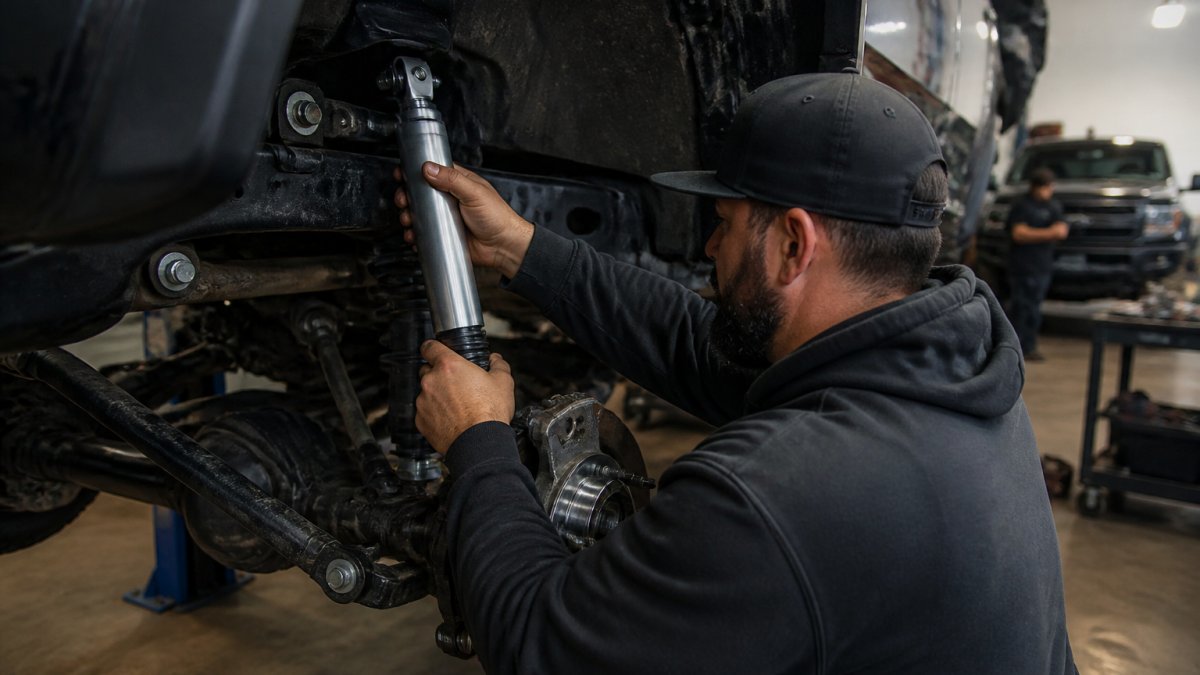
Your shocks do the heavy lifting after your springs do their job. They control how quickly your suspension moves and prevent your truck from bouncing endlessly over bumps.
Off-road shocks are engineered differently than stock shocks. They handle bigger movements, dissipate more heat, and keep your vehicle stable over aggressive terrain.
Damping and Compression Settings
Damping controls how fast your shocks move. Compression damping affects how quickly the shock compresses when you hit a bump. Rebound damping controls how fast it extends afterward.
Too little damping and your truck bounces all over the place. Too much and your suspension feels stiff and doesn't move smoothly. The sweet spot depends on how you drive and what terrain you tackle most.
Many quality shocks let you adjust damping settings. This is powerful because you can tune your suspension to match your driving style. Softer settings for trail comfort, stiffer for high-speed off-road runs.
Monotube vs Twin-Tube Design
Monotube shocks have a single cylinder with the piston rod and damping valve in one chamber. Twin-tube shocks have an inner and outer cylinder. Each design has tradeoffs.
Monotube shocks handle heat better because the entire outer cylinder acts as a cooling surface. They're popular for serious off-road use where you're pushing hard and generating lots of heat.
Twin-tube shocks are simpler and often less expensive. They work fine for moderate off-road use and daily driving. They're more forgiving if you're not an experienced tuner.
For most owners in Dallas, GA who blend daily driving with weekend trails, either design works.
Suspension for Daily Driver and Off-Road Use
Many truck owners want one vehicle that works for everything. Daily commuting, weekend trails, occasional towing. This is where compromise becomes essential.
The best approach is choosing components that don't force you to choose. You want a lift kit that doesn't trash your ride quality on pavement.
READY TO BUILD YOUR DREAM TRUCK? →
This is where we at Purpose Built Automotive focus most of our recommendations.
Look for suspension systems designed specifically for dual-duty vehicles. Many manufacturers now offer kits that balance off-road capability with on-road comfort.
A quality dual-purpose suspension setup means you don't sacrifice one for the other.
Off-Road Suspension for Towing and Overlanding
Towing changes everything about suspension. The weight behind you affects how your truck handles, where it sits, and how stable it feels.
Overlanding rigs face similar demands. You're carrying gear, passengers, and fuel for long trips. Your suspension needs to support all that weight without bottoming out or wallowing around.
Load-Leveling and Weight Distribution
Load-leveling suspension keeps your truck level when you're towing or carrying heavy loads. Without it, the weight pulls your rear down and your front lifts up.
Air suspension excels at load-leveling because you can adjust pressure to compensate for weight. Coil spring systems can use helper springs or airbags to achieve similar results.
The goal is keeping your truck level under load. This improves traction, stability, and ride quality.
When you're towing in the Dallas, GA area, load-leveling isn't optional. It's a safety feature that matters whether you're pulling a small trailer or a heavy camper.
Extended Range Suspension Systems
Extended range suspensions are built for long trips and heavy loads. They combine higher travel with better damping and load capacity.
These systems use longer shocks, reinforced mounts, and often adjustable components. You get more ground clearance, better articulation, and the ability to carry serious weight without compromising performance.
Extended range systems cost more than basic lift kits, but they're worth it if you're planning serious overlanding trips. They handle the demands of days on rough roads while keeping you comfortable and safe.
Key Factors to Evaluate Before Installing Off-Road Suspension
Before you commit to any suspension upgrade, step back and think about your actual needs. Too many owners buy suspension because it looks cool, not because it solves a real problem.
Vehicle Weight and Payload Capacity
Every truck has a maximum payload capacity. This is the weight your suspension and frame can safely carry. Exceeding it damages your truck and creates safety hazards.
When you add a lift kit and suspension upgrades, you're not changing your payload capacity. You're still limited by what your truck was engineered to handle. This matters if you're planning to carry gear, passengers, or tow heavy loads.
Calculate your actual needs. What weight do you typically carry? What's your maximum load scenario? Make sure your suspension choice supports that weight safely.
Terrain Type and Driving Conditions
The terrain you actually drive shapes which suspension makes sense. Rock crawling demands different characteristics than high-speed desert running or daily commuting with occasional forest roads.
Be honest about your driving. Most owners spend 90 percent of their time on pavement and 10 percent off-road. Your suspension choice should reflect that reality. A basic lift kit with quality shocks works for most people. You don't need extreme components unless you're doing extreme driving.
Warranty and Professional Installation
Suspension work affects your truck's safety and handling. Professional installation matters. Improper setup can cause handling problems, tire wear issues, and even accidents.
When you choose a shop like Purpose Built Automotive in Dallas, GA, you're getting experienced technicians who understand suspension geometry and vehicle dynamics. We install your system correctly and back our work with warranty coverage.
Ask about warranty before you buy. What's covered? For how long? What's the labor warranty on installation? These details matter when something goes wrong.
Common Mistakes to Avoid When Upgrading Suspension
Most suspension problems come from poor planning, not bad components. Avoid these common pitfalls.
Choosing lift height based on looks instead of function is mistake number one.
Mixing quality and budget components is another trap.
Skipping professional installation is tempting but risky. Suspension affects steering, braking, and stability. Mistakes here create safety problems.
Ignoring your truck's geometry after lifting is common. A higher lift changes your angles.
Not maintaining your upgraded suspension will kill it fast. Lifted trucks need more frequent maintenance. Shocks wear out faster. Joints need checking.
Choosing the right off-road suspension means balancing your driving style, your budget, and your truck's capabilities.
Frequently Asked Questions
How do I know what lift height I need for my truck?
Lift height depends on your terrain and intended use. For light off-roading and daily driving, 2 to 3 inches provides adequate clearance and maintains ride comfort. Serious rock crawling or extreme terrain may require 4 to 6 inches or more. Consider your vehicle's weight capacity, wheelbase, and whether you'll tow or carry heavy cargo. Professional assessment at a shop like Purpose Built Automotive helps determine the right height for your specific needs.
What's the difference between monotube and twin-tube off-road shocks?
Monotube shocks house the piston rod and spring in a single tube, offering better heat dissipation and consistent performance on rough terrain. Twin-tube designs use an inner and outer tube, providing a smoother ride on daily roads but less precise control over extended travel. For serious off-roading, monotube shocks handle extreme conditions better. For mixed daily driving and occasional off-road use, twin-tube may offer better overall comfort, though quality monotube options work well for both applications.
Will upgrading my off-road suspension void my vehicle warranty?
Aftermarket suspension upgrades can affect your manufacturer warranty if they directly cause component failure. Most reputable shops and quality suspension systems are designed to work safely with your vehicle. However, your warranty coverage depends on the specific components modified and your manufacturer's policy. It's important to discuss warranty implications before installation. Purpose Built Automotive can address these concerns and help ensure your upgrades maintain coverage where possible.
How does towing a heavy trailer affect my suspension choice?
Towing adds significant weight that compresses your suspension and reduces ground clearance. For regular towing, you need load-leveling shocks and upgraded springs rated for your trailer weight plus cargo. Extended-range suspension systems designed for overlanding and towing maintain ride height and handling under load. Calculate your total weight (vehicle, trailer, cargo) against your suspension's payload capacity to avoid bottoming out or unsafe handling. Professional consultation ensures your suspension safely handles your typical towing scenarios.